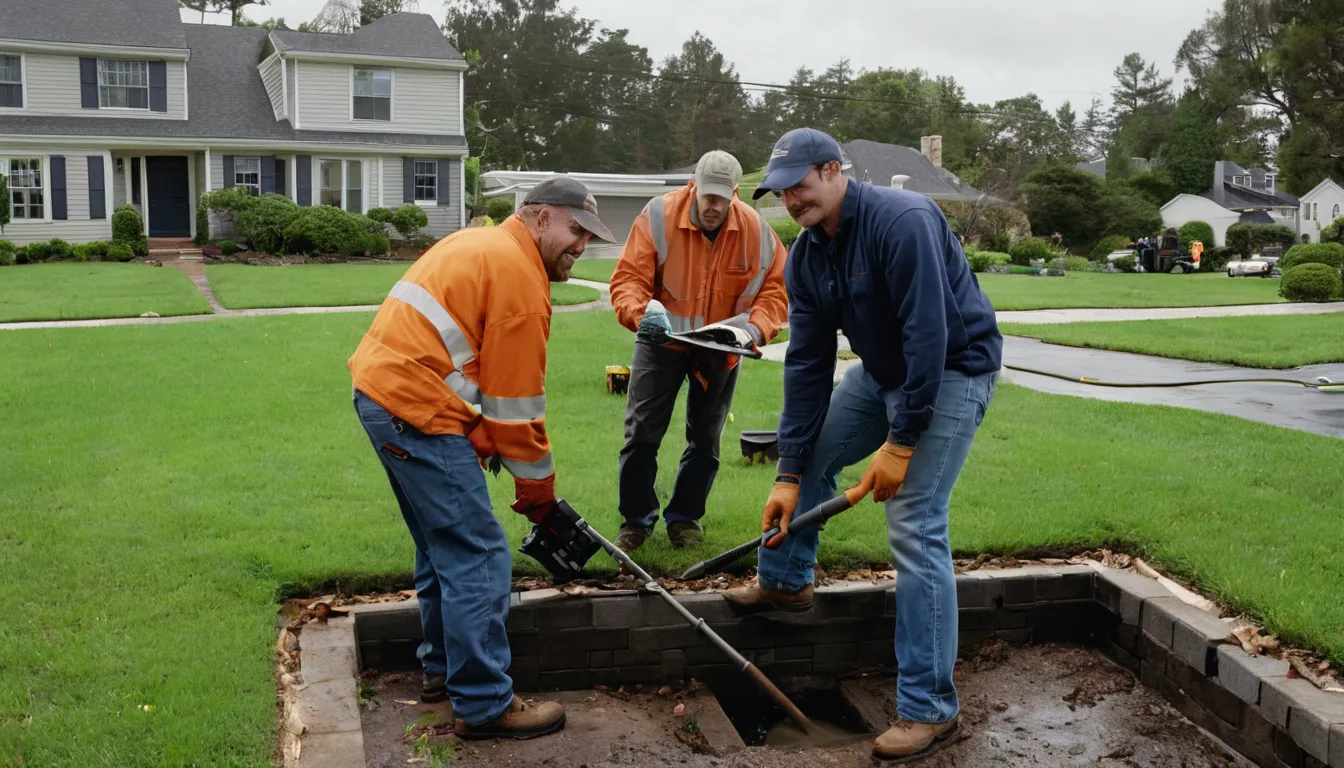
Sewer Line Repair Through Local Providers
Request a written estimate today
The sewer line carries waste from your house to the municipal main or your septic system. When it cracks, sags or clogs, sewage can back up into basements and floor drains or soak into the yard. Pitchexperimental Septic is a referral service. It does not do the work.
You send a request. Pitchexperimental Septic matches it to an independent provider in the Bowie area. The provider inspects the line, explains the findings, quotes in writing and does the repair. Fixes range from clearing a blockage to lining a pipe or replacing a section. Referral, not repair. Providers do the work, and you decide whether to hire them. Use this page to learn the warning signs, the repair options and the questions worth asking.
Sewage Backing Up? Start Here
Stop using water in the house. That means no flushing, showers, laundry or dishwasher. Every gallon you send down has nowhere to go and may surface at the bottom-most drain, often in a basement.
Keep children and pets away from standing sewage. It carries bacteria. Wear gloves and boots if you must enter the area.
Document the Damage
Take photos and short videos of the backup and of anything it touched. Note when it started. Providers can often help document damage for a claim, and some policies may cover sudden damage, so check your policy.
Request a callback to check provider availability. Many providers can respond quickly to an active backup, but timing varies.
Signs of a Sewer Line Problem
Backups are the loud sign. Quieter ones show up first:
- Several drains slow at once, not just one sink
- Gurgling from toilets when a tub drains
- Sewage smell in the basement or yard
- A soggy, unusually green patch over the line
- Cracks in a slab or foundation wall
- Rodents or insects entering from the pipe
One Slow Drain or the Whole Line?
A single slow sink is usually a local clog. If the bottom-most drain in the house backs up when upstairs fixtures run, the main line is the likely suspect. A provider can confirm which it is.
What Damages Sewer Lines
Tree roots are a top cause. They enter at joints and grow into thick masses inside the pipe.
Age is the next factor. Older homes may have cast iron that flakes and rusts from the inside, clay pipe with loose joints, or galvanized lines that corrode. Pitch fiber (Orangeburg) pipe can collapse and ovalize.
Seasonal ground movement adds stress. Frost, thaw cycles and heavy storm runoff shift soil around buried pipe. Heavy vehicles and nearby digging can crack it, and grease and wipes build blockages.
Sewer Line or Septic System?
If your home is not on a municipal sewer, the problem may sit at the tank or drainfield instead. A full tank can mimic a line failure. Septic tank pumping or emergency septic cleaning may be the right first step, and drainfield repair is a separate job. Those have their own pages. A provider will tell you which part is failing.
Homes with a private well should mention it. Providers can note the distance between the line and the well, and water well service is a different trade if testing is needed.
How a Provider Finds the Cause
The standard tool is a sewer camera. A small lens on a flexible cable runs through a cleanout, and the provider watches the pipe on a screen. It shows roots, cracks, offsets, sags and breaks.
A locator tracks the camera from above ground. That pinpoints depth and position, so digging, if any, is limited to the right spot.
Repair Options
The fix depends on what the camera finds. Providers usually choose among three approaches.
Cleaning and Jetting
Roots and grease can be cut out or flushed with high-pressure water. This clears the pipe but does not fix a broken one.
Spot Repair
A short damaged section is dug up and replaced. It suits a single crack or offset in an otherwise sound line.
Lining or Full Replacement
Trenchless lining coats the inside of an existing pipe with a resin sleeve and needs little digging. Full replacement removes the old line and installs new pipe. It is used when the pipe has collapsed or has too many faults to line.
What Drives the Price
Length, depth and access matter most. A line under a driveway, patio or mature tree costs more than one under lawn. Pipe material, number of repair points and the method also move the quote.
Get it in writing. A proper quote lists the scope, materials, restoration and what happens if the crew finds more damage.
Permits and Property Lines
Most areas require a permit for sewer line work, and an inspection may follow. The provider usually handles the paperwork, but ask.
Ownership matters. In many places the homeowner owns the pipe from the house to the connection at the main, which can include the section under the street or sidewalk. Your municipality can confirm where responsibility starts and ends.
Restoring Your Yard
Trenchless methods leave small access pits. Open-trench work leaves a long cut through lawn, beds or pavement. Ask whether grading, seed or sod, and hardscape repair are in the quote or are separate.
Keeping the Line Healthy
- Flush only toilet paper and human waste
- Keep grease out of drains
- Keep deep-rooted trees away from the line
- Have a camera inspection before buying an older home
- Know where your cleanout is and keep it accessible
Questions to Ask the Provider
- Will you run a camera and share the video?
- Is the quote in writing, with the method named?
- Who pulls the permit?
- What is included for yard restoration?
- What happens if more damage turns up?
How This Referral Works
Pitchexperimental Septic takes your request and passes it to an independent provider. The provider sets the price, schedule and terms. You can accept, compare or decline with no obligation.
For a non-urgent problem, request an estimate and have the details ready.
What's Included
Camera Inspection
A provider runs a camera through the line to locate roots, cracks, sags and breaks.
Line Clearing
Roots and grease blockages can be cut out or jetted clear.
Spot Repairs and Lining
Damaged sections can be replaced, or the pipe can be lined with little digging.
Full Line Replacement
When pipe has collapsed or failed throughout, providers install new line from house to connection.
Typical Sewer Line Repair Costs
Prices below are typical U.S. ranges. Your quote depends on pipe length, depth, access and method, so ask the provider for a written estimate before work starts.
| Item | Typical range | Notes |
|---|---|---|
| Camera inspection | $100 – $500 | Often applied toward repair if you hire the same provider |
| Drain clearing or jetting | $250 – $800 | Clears roots or grease; does not fix broken pipe |
| Cleanout installation | $500 – $2,000 | Improves access for future work |
| Spot repair (one section) | $1,500 – $5,000 | Depends on depth and surface above |
| Trenchless lining | $80 – $250 per foot | Less digging; needs a pipe that can be lined |
| Full line replacement | $3,000 – $25,000 | Length, depth and restoration drive the range |
How It Works
Send Your Request
Describe the backup or warning signs, your address and whether the home uses city sewer or a septic system.
Get Matched
Pitchexperimental Septic passes your request to an independent provider in the Bowie area who handles sewer line work.
Inspection and Quote
The provider scopes the line, explains the cause and gives you a written quote.
Approve and Repair
If you accept, the provider schedules the repair, handles permits and restores the work area.
Why Call Pitchexperimental Septic
Referral, Not Repair
Pitchexperimental Septic connects you with independent providers. It does not send crews or perform the work.
Providers Do the Work
The provider inspects, quotes and repairs. You deal with them directly on price and schedule.
Get It in Writing
Ask every provider for a written quote that names the method, scope and restoration.
No Obligation
Requesting an estimate does not commit you. Compare, ask questions and decide on your own.
Other Services
Need sewer line repair in Bowie?
Describe your septic or sewer problem and ask for an estimate. Your request goes to an independent provider in our network. No obligation to hire.
Sewer Line Repair FAQ
- How do I know if my sewer line is broken?
- Common signs include multiple slow drains, gurgling toilets, sewage odors, wet spots in the yard and backups in the bottom-most drain of the house. A camera inspection by a provider can confirm the cause and location.
- How much does sewer line repair cost?
- Typical U.S. costs run from a few hundred dollars for clearing to several thousand for spot repair or replacement. Length, depth and access drive the price, so get a written quote.
- Does homeowners insurance cover sewer line repair?
- Coverage varies. Some policies may cover sudden damage, while wear, age and root growth are often excluded. Check your policy or ask your insurer, and ask the provider to help document damage.
Reach a local provider
Describe your septic or sewer problem and ask for an estimate. Your request goes to an independent provider in our network. No obligation to hire.
No obligation